Most school principals already know outdoor play matters. What they actually need is the evidence to back it when a P&C questions a playground upgrade, when budgets are reviewed, or when a governing body wants to understand why the school is investing in its grounds.
The outdoor play benefits documented by Australian and international researchers are specific, measurable, and directly relevant to the outcomes your school reports against: physical health, academic engagement, social development, and student wellbeing.
This post unpacks what the research actually says about outdoor play for primary school students in Australia, why it matters at the school ground level, and what a well-designed outdoor environment needs to deliver those benefits.
EduMarking is Australia’s school line marking specialist. More than 10,000 schools across Australia and internationally trust us to build outdoor environments that make the outcomes in this post a daily reality for their students.
Key Takeaways
- Only 23% of Australian children aged 5 to 14 meet the recommended 60 minutes of daily physical activity, according to the Australian Institute of Health and Welfare.
- The Australian Government Department of Health recommends at least 60 minutes of moderate to vigorous physical activity every day for children aged 5 to 17 years.
- Outdoor play delivers measurable benefits across five domains: physical health, cognitive development, social skills, emotional wellbeing, and academic performance.
- School recess and lunch breaks are among the most reliable opportunities for children to meet daily physical activity guidelines, but only if the outdoor environment supports structured play.
- Playground line markings extend active play time by giving students a self-directed framework for movement, without teacher involvement or additional resources.
What Does the Research Say About Outdoor Play Benefits?
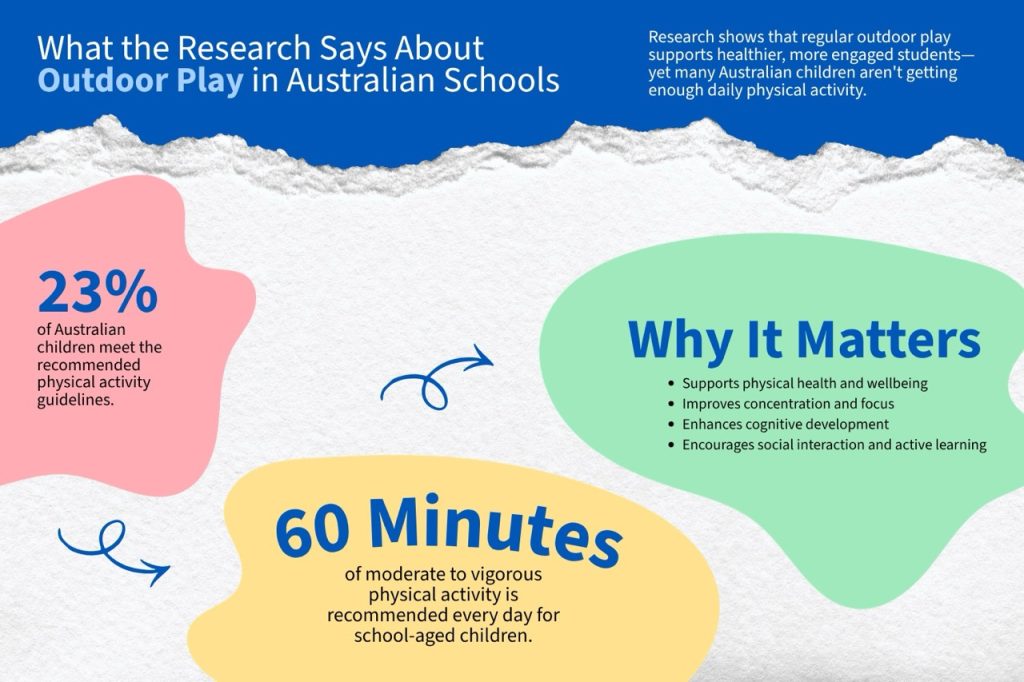
The Australian Government Department of Health recommends that children aged 5 to 17 years accumulate at least 60 minutes of moderate to vigorous physical activity each day. The recommendation is clear on one important point: the 60 minutes does not need to happen in one continuous block. Several shorter sessions spread across the school day are equally effective.
The gap between the guideline and reality is significant. Data from the Australian Institute of Health and Welfare (AIHW) shows that only 23% of Australian children aged 5 to 14 met the recommended 60 minutes of physical activity every day. Only 1 in 10 children met both the physical activity and screen time guidelines combined.
For school leaders, that gap represents a genuine opportunity. Recess and lunch breaks are among the most consistent and controllable points in the school day where structured outdoor play can contribute to meeting those guidelines. The outdoor environment itself is the lever.
Why the outdoor environment is the lever, not the curriculum
Physical education classes alone are not sufficient to close the activity gap. Most schools schedule PE once or twice per week. The daily accumulation of physical activity happens during unstructured time, and unstructured time only becomes active when the outdoor environment gives students a reason to move.
Research consistently shows that when playgrounds include structured game markings, running circuits, and defined play zones, students spend significantly more time in active movement during recess than they do on unmarked asphalt. The design of the environment shapes the behaviour of the students in it.
The Five Benefits of Outdoor Play for Primary School Students
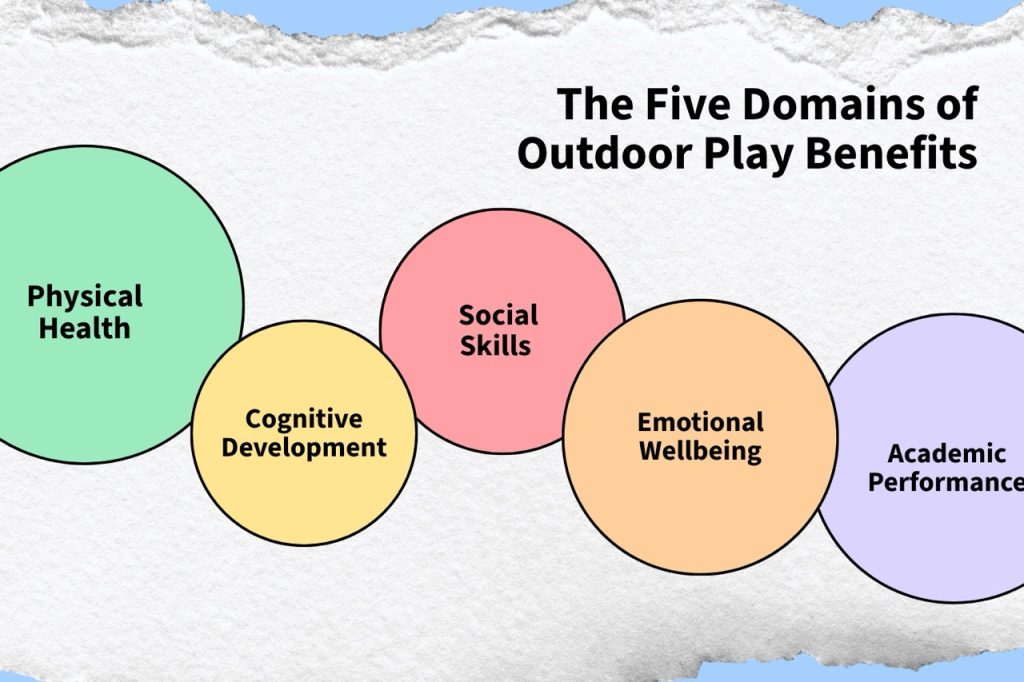
The research on outdoor play benefits is organised across five distinct domains. Each has direct relevance to what school principals and business managers report against, and each can be directly influenced by the quality of a school’s outdoor environment.
Physical health and motor development
The most direct outdoor play benefit is physical. Regular movement during school hours builds cardiovascular endurance, gross motor skills, bone density, muscle strength, and coordination in primary school-aged children. These outcomes are not incidental: the Australian Curriculum identifies movement and physical activity as a core strand of the Health and Physical Education learning area, running from Foundation to Year 10.
Schools that invest in structured outdoor environments, including running circuits, active game zones, and sport court markings, create the physical conditions for these outcomes to accumulate naturally across the school week, not just during scheduled PE lessons.
Cognitive development and academic performance
The relationship between physical activity and academic performance is well established in the research literature. Studies referenced by the Sydney Children’s Hospital Network show that regular physical activity improves attention levels in children directly after periods of exercise, and that students engaged in regular physical activity improved academic performance by 6% over a three-year period compared to less active peers.
For primary school leaders, this reframes outdoor play from a welfare activity into a learning investment. A well-designed playground is not time away from academic work: it actively supports the cognitive conditions that make classroom learning more effective.
Social skills and cooperative behaviour
Outdoor play is one of the most effective environments for social skill development in primary school-aged children. Self-directed games, particularly those with rules built into the marking itself, like four square, hopscotch, and snakes and ladders, require students to negotiate, take turns, follow shared rules, and manage disagreements without adult mediation.
These are not incidental social outcomes. They are the practical, daily development of the cooperative behaviours that teachers identify as foundational to productive classroom environments. Schools that provide structured outdoor play settings are directly investing in the social fabric of their school community.
Emotional wellbeing and stress regulation
Time outdoors during the school day provides a genuine mental reset for primary school students. Movement reduces cortisol, supports the release of endorphins, and gives students a different kind of engagement to the cognitive demands of classroom work.
The evidence on emotional wellbeing and outdoor play is particularly relevant for schools working on student engagement and behaviour. Research shows that children who have adequate outdoor play time during the school day display fewer behavioural issues in afternoon sessions and report higher levels of positive emotion overall.
Creative thinking and imagination
Unstructured outdoor play, and play that is only partially structured by game markings rather than fully directed by a teacher, gives students space to improvise, adapt, and create. This is where imaginative play, cooperative storytelling, and creative problem-solving develop naturally.
Playground designs that include open-ended elements, road maps, creative zones, and flexible spaces alongside structured game courts create the conditions for this kind of play. A well-designed school ground serves the full spectrum of student engagement: competitive, cooperative, educational, and imaginative.
Is your school’s outdoor environment set up to deliver these outcomes?
- The research is clear: structured outdoor environments produce measurably better outcomes for students. EduMarking designs and installs playground line markings that give students a framework for active, self-directed play across every recess and lunch break.
What Happens When Students Do Not Get Enough Outdoor Play?
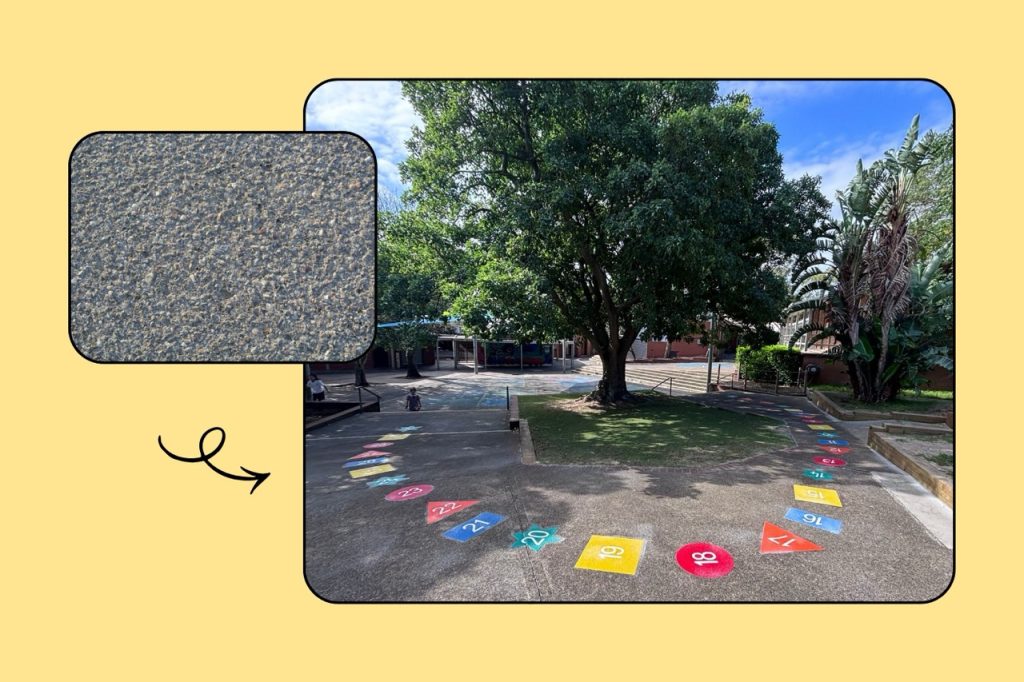
The research on the absence of outdoor play is as instructive as the evidence for its benefits. When students lack regular, structured outdoor play time, the effects are observable within the school day and accumulate over time.
Reduced concentration and classroom engagement
Children who have not had adequate movement during the school day show lower attention levels in afternoon sessions. This is not a behavioural issue: it is a physiological one. The brain requires regular movement breaks to maintain the attentional capacity that classroom learning demands. Schools that see afternoon disengagement should examine their outdoor environment as a contributing factor, not just their classroom practices.
Increased behavioural incidents during unstructured time
Unstructured time without a clear environment to engage with produces more conflict. When students have no game to play, no court to use, and no physical space with a defined purpose, minor disputes escalate. Schools with low-engagement playgrounds consistently report higher rates of playground incidents during recess and lunch. Structured markings reduce this by giving students a shared framework for interaction.
Long-term health risk
The AIHW data makes clear that the physical activity gap in Australian children is not a short-term concern. Children who do not develop active movement habits during primary school years are significantly less likely to maintain sufficient physical activity levels through adolescence and adulthood. School is the most reliable environment where those habits can be formed.
How Schools Can Support Outdoor Play Benefits Through Playground Design
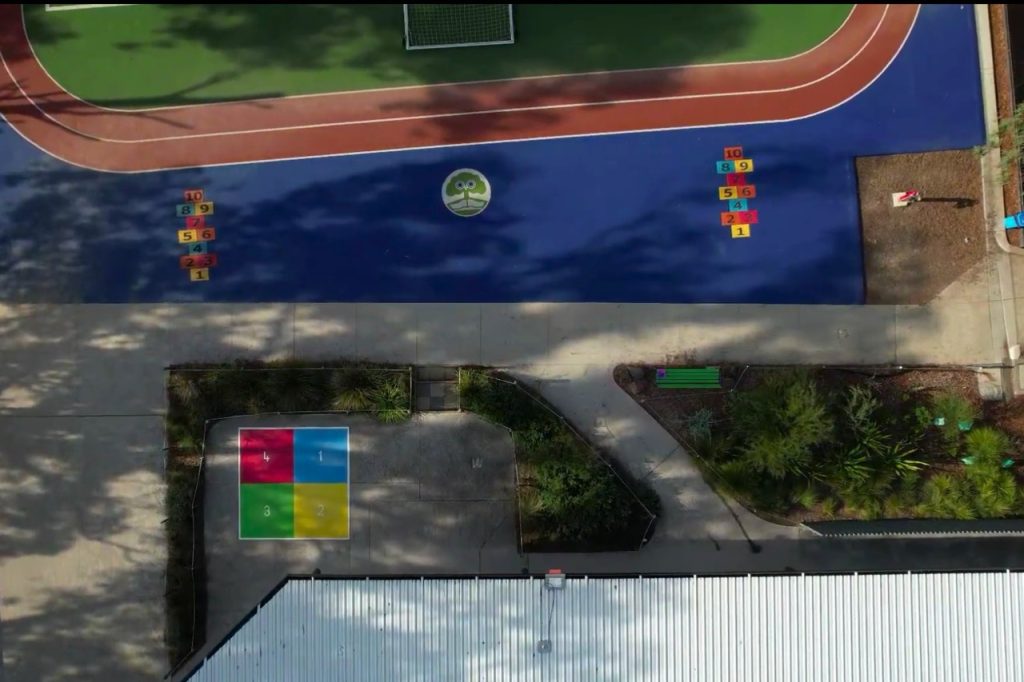
The research consistently identifies the outdoor environment as a primary driver of whether children actually access active play during the school day. Knowing the benefits of outdoor play is the first step. The second step is designing a school ground that makes those benefits accessible to every student, every day.
Provide a framework for self-directed play
The most effective thing a school can do is give students a reason to move without requiring teacher direction. Thermoplastic playground line markings do exactly this. A four square court, a running circuit, a hopscotch grid, or a snakes and ladders board all provide a self-contained framework for active play that students can initiate, run, and sustain independently. For a full list of marking options across all six design categories, see our playground games guide.
This matters because teacher-led play is limited by staff availability during recess and lunch. Student-initiated play, enabled by a well-marked environment, scales to the full student population without additional resourcing.
Design for the full range of students
A playground that serves only students drawn to competitive sport leaves a significant proportion of the school population without an outdoor play option. Inclusive outdoor environments, those that include sensory elements, creative zones, educational markings, and quieter interactive designs alongside active sport courts, distribute the benefits of outdoor play across the full cohort.
Schools seeking to build out their outdoor learning areas can also combine game markings with structured outdoor seating zones to create a graduated environment that supports both active and restorative outdoor time side by side.
Plan outdoor surfaces as infrastructure, not cosmetics
A playground designed around long-life thermoplastic markings is a planned asset with a documented maintenance cycle, not a reactive patch job. Schools that treat their outdoor surfaces as infrastructure, assessed, installed to specification, and maintained on a schedule, spend less over time and deliver more consistent outcomes for students. Where surfaces need attention before markings can be installed, concrete resurfacing ensures the base is structurally sound and the thermoplastic reaches its full seven-year-plus lifespan.
A structured playground maintenance program keeps markings visible, surfaces safe, and the outdoor environment performing at the standard that the research says it needs to in order to deliver outcomes for students.
Frequently Asked Questions
Research documents five core learning outcomes from outdoor play: improved physical health and motor development, stronger cognitive function and attention, enhanced social skills through cooperative play, better emotional regulation, and increased creative thinking. The Australian Curriculum formally recognises physical activity and movement as integral to Health and Physical Education from Foundation to Year 10.
The Australian Government Department of Health recommends at least 60 minutes of moderate to vigorous physical activity per day for children aged 5 to 17 years. This does not need to be a single continuous block. Shorter bursts of activity spread across the school day, including recess and lunch, contribute toward the daily total. Data from the AIHW confirms that only 23% of Australian children aged 5 to 14 currently meet this guideline.
Yes, and the evidence is consistent. Self-directed outdoor games build the social skills that structured classroom activities cannot replicate in the same way: negotiation, conflict resolution, rule-following, turn-taking, and cooperative problem-solving. These outcomes are most pronounced when the outdoor environment gives students a shared framework for interaction, which is what structured playground markings provide.
The benefits extend beyond physical health to include improved classroom concentration, lower rates of behavioural incidents during the school day, better emotional regulation in afternoon sessions, and stronger social skills over time. Schools that invest in outdoor play environments are investing in measurable academic and wellbeing outcomes, not just recreation facilities.
Research links insufficient outdoor play to lower afternoon classroom attention, increased playground incidents during unstructured time, poorer long-term physical activity habits, and reduced social skill development. For school leaders, this positions the outdoor environment as a direct contributor to the school’s pastoral care and academic outcomes, not a discretionary add-on.
Ready to build an outdoor environment that delivers for your students?
EduMarking designs and installs thermoplastic playground line markings across Australia. From running circuits to educational trails and sport courts, we help schools create outdoor environments where the research outcomes actually happen. Backed by a 5-year product warranty, installed during school holidays.