The most common mistake schools make when choosing outdoor play equipment is applying a residential mindset to a commercial problem. Consumer-grade equipment from retail suppliers looks adequate on a brochure and costs less upfront. It is not built for 300 to 600 students per day, it rarely meets the Australian Standard for playground equipment, and it creates ongoing compliance and maintenance obligations that cost more over five years than the correct equipment would have cost at the outset.
This guide walks through the decision framework Australian primary school principals and business managers need before selecting outdoor play equipment: the standards that apply, the criteria that separate a sound investment from the wrong choice, the questions to ask any supplier, and the common pitfalls that create ongoing liability.
EduMarking is Australia’s school line marking and outdoor environment specialist. More than 10,000 schools across Australia and internationally trust us to design, install, and maintain school outdoor spaces that meet commercial-grade standards and deliver genuine value over their full lifecycle.
Key Takeaways
- The Australian Standard AS 4685 series governs all playground equipment installed in school settings. Compliance is not optional: it is a WHS obligation for school operators.
- Commercial-grade outdoor play equipment is built to withstand 300 to 600 students per day. Consumer-grade equipment sold through retail channels is not rated for this use and will fail faster, cost more to maintain, and create compliance gaps.
- The five criteria that matter most when choosing outdoor play equipment for a school are: AS 4685 compliance, structural ratings, warranty terms, installation credentials, and maintenance support.
- Outdoor play equipment for primary schools must serve the full age range from Foundation to Year 6, which means zoning by developmental stage rather than selecting one type of equipment for the whole grounds.
- Line markings, seating, and surface quality are as important as freestanding equipment. A well-marked, well-surfaced playground outperforms an expensive equipment set installed on poor asphalt.
The Australian Standard That Governs School Playground Compliance
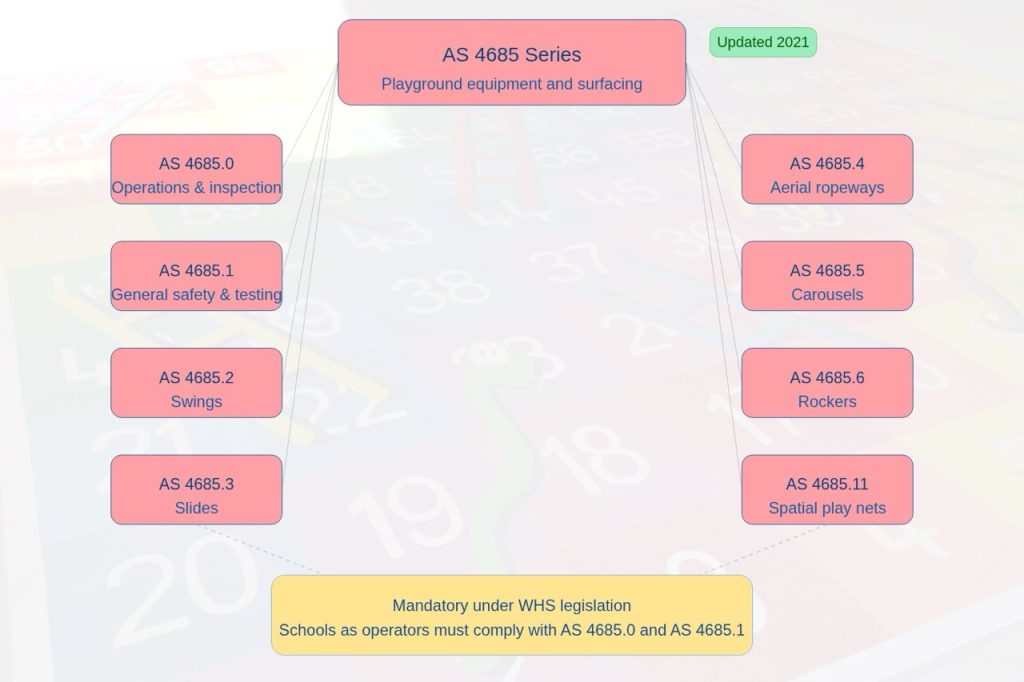
Every piece of outdoor play equipment installed in an Australian school must comply with the AS 4685 series, the national standard for playground equipment and surfacing maintained by Standards Australia. Updated in 2021 to align with international standards, the series covers general safety requirements, fall heights, entrapment zones, structural integrity, surface impact testing, and inclusive design.
The AS 4685 series is not a recommendation. Under Work Health and Safety legislation, schools as playground operators have a duty of care to ensure the equipment on their grounds meets these requirements. Kidsafe NSW, the national child safety peak body, notes that annual inspections by a qualified playground inspector are required under the standard, and that operators are responsible for ongoing maintenance and inspection regardless of who installed the equipment.
The practical implication for schools is straightforward: any outdoor play equipment supplier that cannot provide written AS 4685 compliance certification, engineering documentation, and an installation manual is not an appropriate supplier for a school setting.
What AS 4685 requires of schools as operators
AS 4685.0 outlines the responsibilities of playground operators, which includes schools. It requires that equipment is correctly installed by qualified personnel, that annual comprehensive inspections are conducted by a qualified inspector, that a maintenance log is kept, and that any non-conformances identified in an inspection are rectified within a defined timeframe based on their risk rating.
Schools that purchase consumer-grade equipment without AS 4685 compliance documentation are, in practice, accepting an unquantified liability exposure. The cost of a compliance failure, including injury claims, regulatory scrutiny, and emergency equipment removal, significantly exceeds the cost difference between commercial-grade and consumer-grade equipment at the point of purchase.
The difference between AS 4685.0 and AS 4685.1
AS 4685.0 covers the operational requirements: development, installation, inspection, maintenance, and operation of playgrounds. AS 4685.1 covers the general safety requirements and test methods for the equipment itself. Both parts apply to school playgrounds. When evaluating a supplier, schools should request compliance documentation against both parts, as well as the relevant equipment-specific parts (AS 4685.2 for swings, AS 4685.3 for slides, and so on).
For more on how playground surface quality and condition affects compliance outcomes, see our guide to concrete resurfacing for school grounds, which covers the surface requirements that underpin AS 4685 compliance.
How to Choose Outdoor Play Equipment for a Primary School: The Five Criteria
Once a school has confirmed that AS 4685 compliance is a non-negotiable baseline, the decision narrows to five criteria that distinguish sound outdoor play equipment investments from expensive mistakes.
| # | Criterion | Why It Matters for Schools | Priority |
|---|---|---|---|
| 1 | AS 4685 compliance | Legal obligation under WHS. No compliance documentation means no suitable school installation. | Non-negotiable |
| 2 | Structural and use rating | Equipment must be rated for the number of daily users at your school. Consumer-grade ratings are not equivalent. | Non-negotiable |
| 3 | Warranty terms | Commercial-grade equipment carries 5 to 15-year structural warranties. Consumer-grade warranties are typically 1 to 2 years. | High priority |
| 4 | Installation credentials | AS 4685.0 requires installation by qualified personnel. Ask for evidence of qualifications and post-installation inspection. | Non-negotiable |
| 5 | Maintenance support | Annual inspections are required under AS 4685.0. Ask whether the supplier provides inspection and maintenance services, or can recommend a qualified inspector. | High priority |
Criterion 1: AS 4685 compliance
Ask every supplier to provide written compliance documentation before you accept a quote. This includes the compliance certificate, engineering certifications for the specific products, and an installation manual that references AS 4685. If a supplier cannot provide these documents at the quoting stage, they cannot provide compliant equipment at the installation stage.
For schools purchasing multiple items, request compliance documentation for each product separately. A supplier may have AS 4685 certification for some products in their range but not others. Bundled quotes can obscure this distinction.
Criterion 2: Structural and use rating
Commercial-grade outdoor play equipment is engineered for high daily use loads: typically 100 to 600 users per day. Consumer-grade equipment sold at retail is designed for a single household, meaning a small number of users per day with infrequent peak loads. Installing consumer-grade equipment in a school with 400 students exposes it to a use load it was not designed to withstand.
Ask suppliers to specify the daily use rating of any equipment they propose. If they cannot provide this specification, the equipment is unlikely to be rated for school use.
Criterion 3: Warranty terms
A 10 to 15-year structural warranty from a reputable commercial-grade supplier is standard for quality school playground equipment. A 12-month warranty from a retail supplier indicates a product designed for limited residential use. The warranty length is a direct proxy for the manufacturer’s confidence in the equipment’s durability under the conditions it will face.
Read warranty terms carefully. Warranties that require specific installation conditions, maintenance schedules, or regular inspections will be voided if those conditions are not met. Build the warranty conditions into your procurement planning before signing off.
Criterion 4: Installation credentials
AS 4685.0 requires that playground equipment is installed by personnel with the qualifications and experience to ensure compliance. Schools should request evidence of installer qualifications as part of the procurement process. A post-installation safety inspection by a qualified playground inspector should also be included in the project scope, confirming that the installed equipment conforms with the standard before students access it.
EduMarking coordinates all installation and post-installation inspection requirements as part of every school outdoor environment project, ensuring that compliance documentation is in place before handover.
Criterion 5: Maintenance support
Annual comprehensive inspections are required under AS 4685.0. AS 4685 playground equipment installed in schools must be assessed by a qualified playground inspector each year, and the school must maintain a written record of inspection findings and rectification actions. This is an ongoing operational commitment, not a one-time purchase requirement.
Schools without an existing playground maintenance program should factor the cost of annual inspections and routine maintenance into their procurement budget before comparing equipment prices. The true cost of outdoor play equipment over a 10-year horizon includes purchase, installation, annual inspection, and routine maintenance.
Not sure where your school’s outdoor play equipment stands on compliance?
- EduMarking provides a complete commercial-grade outdoor environment service: supply, installation, post-installation inspection, and annual maintenance. Every project is delivered with full AS 4685 compliance documentation. We work with schools across Australia and can have a proposal on your desk within 48 hours.
Commercial-Grade vs Consumer-Grade: What Schools Need to Know
The question schools most frequently ask when comparing outdoor play equipment options is whether commercial-grade equipment is worth the higher upfront cost. The answer depends on whether the comparison accounts for the full cost of ownership rather than just the purchase price.
| Criteria | Commercial-grade | Consumer-grade (retail) |
|---|---|---|
| AS 4685 compliance | Certified, documented, verifiable | Typically not certified for school use |
| Daily use rating | 100 to 600 users per day | Designed for household use only |
| Structural warranty | 10 to 15 years | 1 to 2 years typical |
| Installation | By qualified personnel, AS 4685.0 compliant | Self-install, not AS 4685 compliant |
| Maintenance | Annual inspection program available | No structured maintenance program |
| Lifecycle cost (10yr) | Lower: designed for the use load | Higher: fails faster, requires replacement |
| Liability exposure | Documented compliance limits exposure | Undocumented non-compliance creates risk |
The comparison clarifies why commercial-grade is the correct choice for schools regardless of budget pressure. A consumer-grade product installed in a school setting creates a compliance gap that cannot be resolved without replacing the equipment. The short-term saving at purchase becomes a long-term liability.
What Outdoor Play Equipment to Include in a Primary School Playground
Choosing the right mix of outdoor play equipment requires matching the equipment to the developmental stages of your student population. The Australian Curriculum recognises that physical activity and movement needs differ significantly across Foundation to Year 2, Year 3 to 4, and Year 5 to 6 cohorts. An effective primary school playground addresses all three.
Foundation to Year 2: exploration and sensory engagement
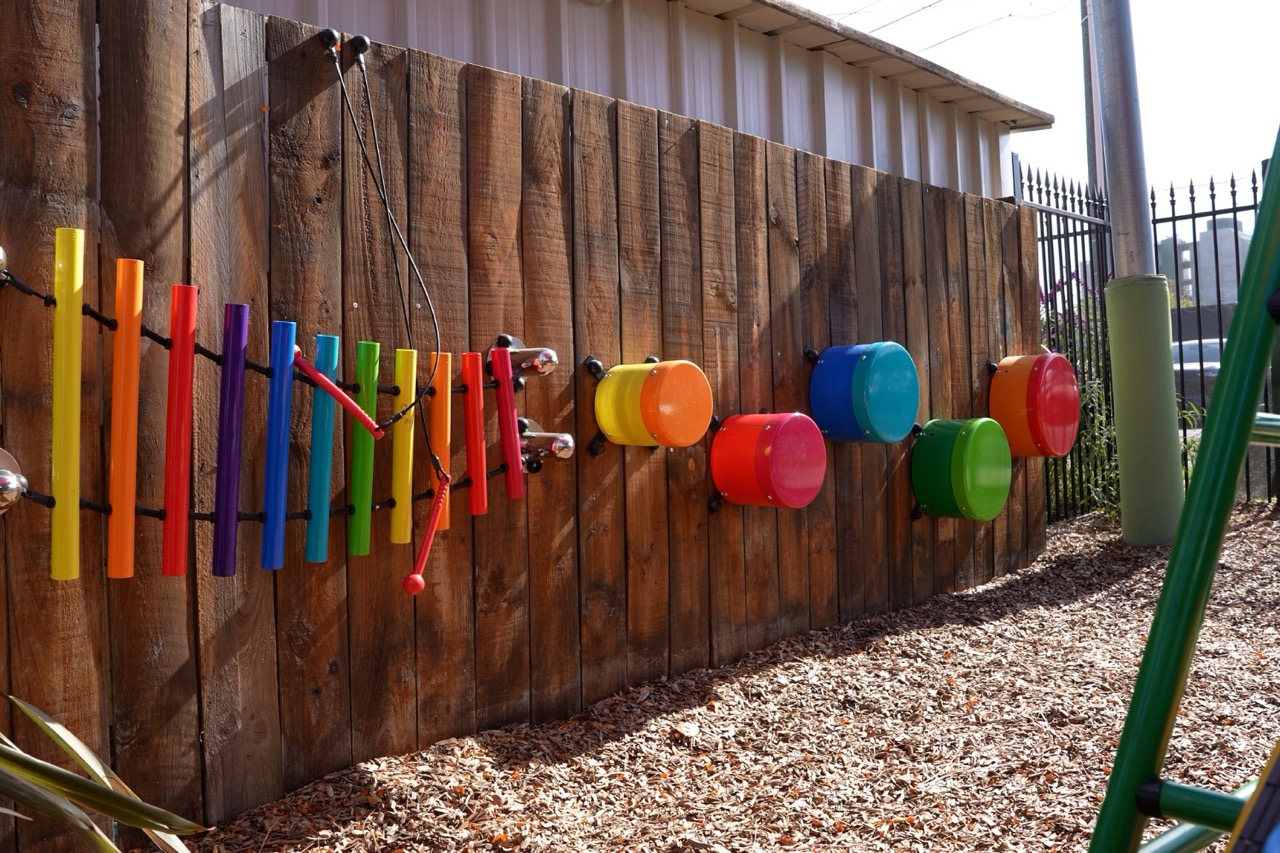
Younger primary students benefit from equipment that encourages open-ended, exploratory play: low climbing elements, interactive panels, sensory markings, balance trails, and musical instruments. The equipment does not need to be large or technically complex. It needs to invite engagement without requiring instruction.
For specific ideas on sensory play elements that work well for this age group, see our guide to sensory play ideas for primary school playgrounds.
Year 3 to Year 4: structured games and cooperative play
Middle primary students engage strongly with structured game environments: four square courts, basketball markings, running circuits, and multi-user climbing structures. This age group benefits from equipment and markings that define the rules of play without requiring adult facilitation.
Thermoplastic game markings are the most cost-effective outdoor play equipment investment for this age group. See our complete guide to playground games for the full range of options and the markings each requires.
Year 5 to Year 6: active sport and fitness
Upper primary students need equipment that supports higher-intensity physical activity: half-court basketball, multi-use sport courts, fitness circuits, and challenge climbing structures. This age group is also more likely to self-organise complex social games when the environment provides clear defined spaces to do so.
Structured outdoor seating zones adjacent to active areas give upper primary students a place to transition between activity and recovery, which research consistently shows improves sustained engagement across the school day.
Frequently Asked Questions
The Australian standard for playground equipment is the AS 4685 series, maintained by Standards Australia. AS 4685 playground equipment requirements cover general safety, fall heights, entrapment zones, structural integrity, surface testing, and inclusive design across eight parts. AS 4685.0 governs operational requirements including installation, inspection, and maintenance. Schools as playground operators are responsible for ensuring their equipment meets this standard and that annual inspections are conducted by a qualified playground inspector.
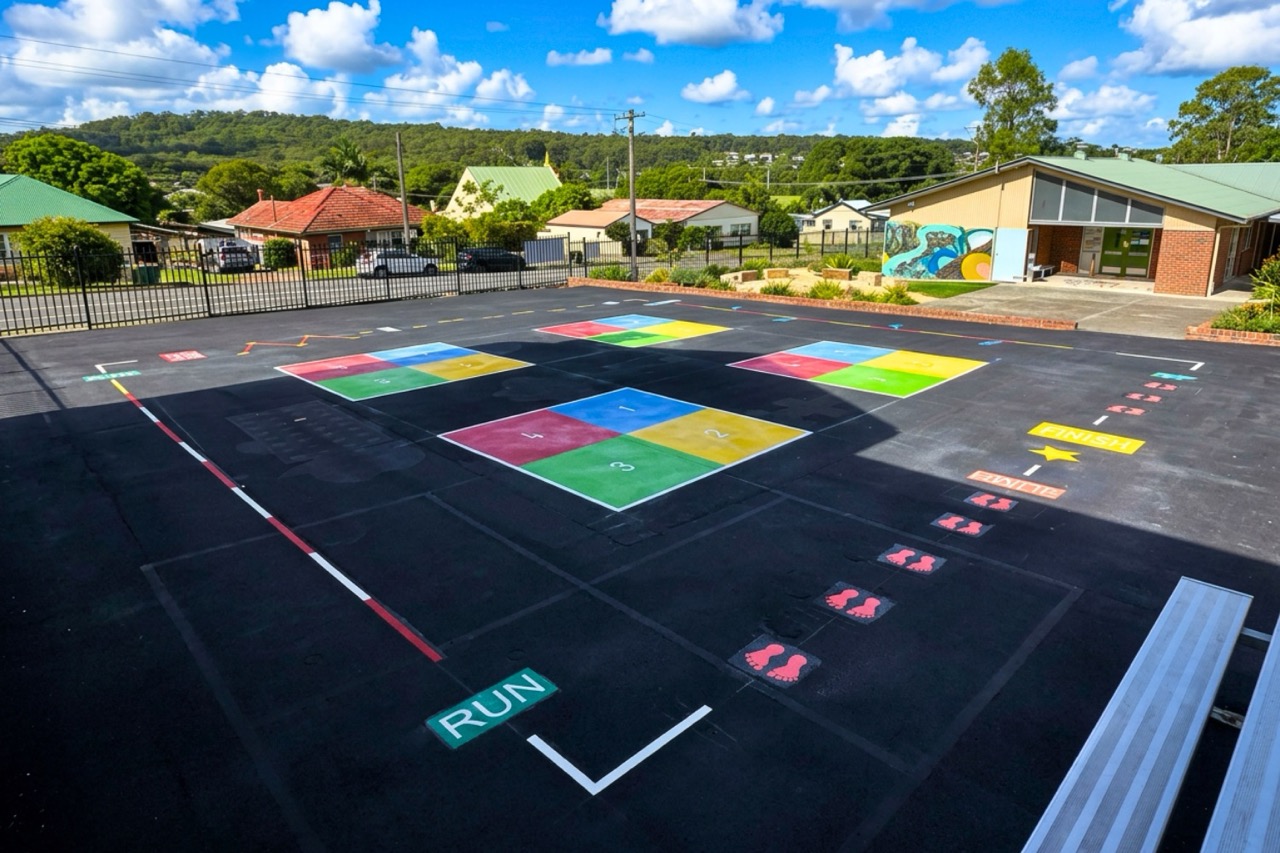
The most common outdoor play equipment in Australian primary school playgrounds includes thermoplastic line markings (for game courts, running circuits, and educational trails), freestanding climbing structures, basketball and sport court markings, sensory elements such as outdoor musical instruments and textured surfaces, and shade structures with adjacent seating zones. The most cost-effective starting point for most schools is thermoplastic game markings, as they require no groundworks, suit all age groups, and deliver immediate engagement without ongoing consumable costs.
Seesaws were progressively removed from Australian school playgrounds following updates to the AS 4685 standard, which identified entrapment and impact injury risks associated with traditional seesaw designs that could not be cost-effectively mitigated. The Kidsafe NSW playground advisory service notes that play equipment is assessed against both its risk profile and its developmental benefit. Modern equivalent equipment, such as spring rockers and balance beams, delivers the vestibular and cooperative play benefits of the seesaw without the entrapment risk.
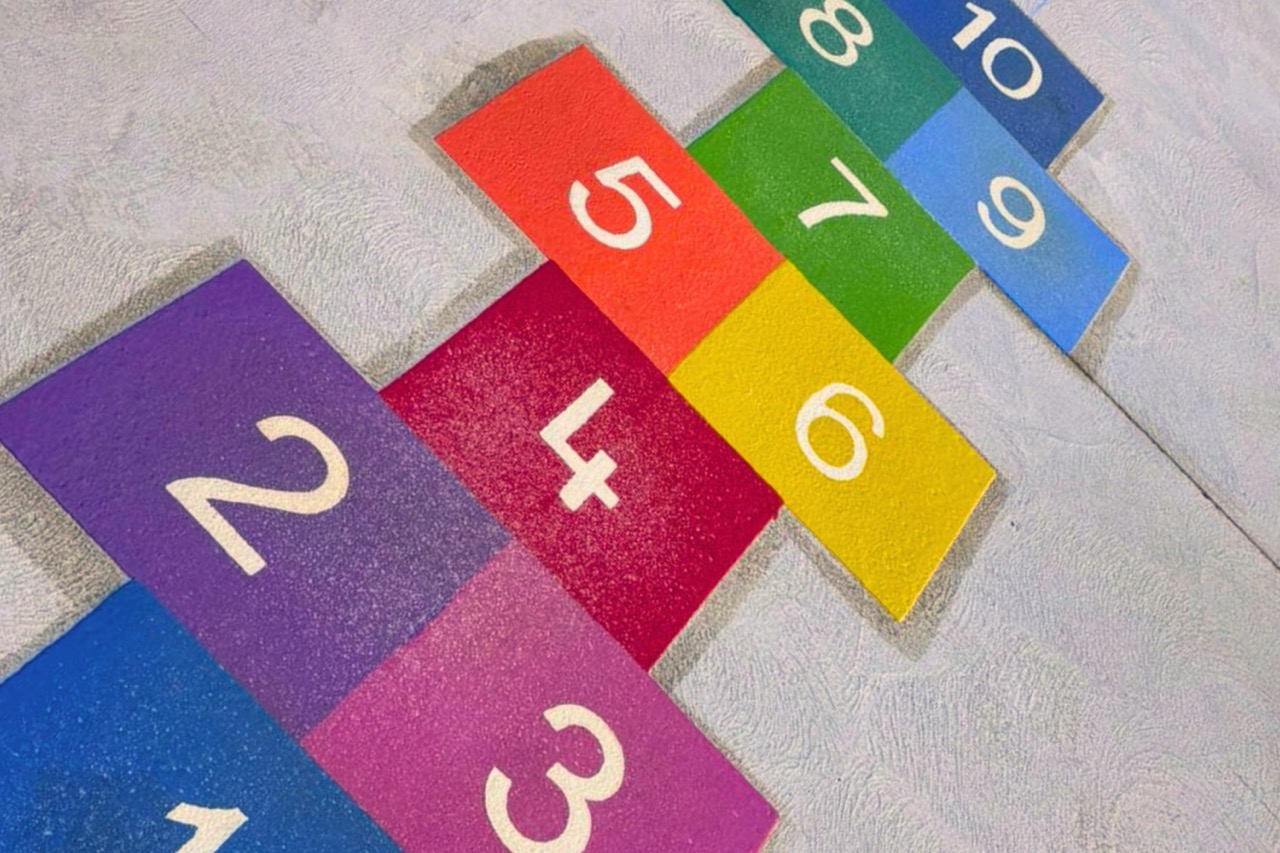
Thermoplastic playground line markings, including four square courts, hopscotch grids, running circuits, and basketball markings, are the most widely installed outdoor play equipment in Australian primary schools because they serve the largest number of students simultaneously, require no ongoing maintenance beyond the surface itself, and are among the most cost-effective installations available. Outdoor musical instruments are the fastest-growing category, driven by the growth of sensory-inclusive playground design and increased demand for equipment that serves students with diverse learning needs.
The strongest trends in Australian primary school outdoor play equipment in 2026 are sensory-inclusive design, nature play integration, and multi-use surface optimisation. Sensory-inclusive design prioritises equipment that serves students with autism spectrum conditions, sensory processing differences, and physical disabilities alongside neurotypical students. Nature play integrates natural materials and organic forms into the playground environment. Multi-use surface optimisation uses thermoplastic markings to maximise the play value of existing asphalt without capital works, making it the most accessible upgrade for schools with limited budgets.
Ready to invest in outdoor play equipment that meets the standard?
EduMarking supplies and installs commercial-grade outdoor play equipment across Australia, including thermoplastic line markings, outdoor musical instruments, seating, and surface resurfacing. Every project is delivered with full AS 4685 compliance documentation. Installations are completed during school holidays with zero disruption to the school day.