Most principals know their playground needs a sensory element. The challenge is knowing exactly which sensory play ideas are practical to install, durable enough for daily school use, and genuinely engaging across the full range of student abilities and year levels.
This guide organises the most effective sensory play ideas for primary school playgrounds by the sensory type they activate: sound, touch, sight, and movement. Each idea includes what is needed to install it and the year levels it suits best.
The case for sensory play is backed by current Australian and international research. A 2024 study published in Educational Sciences found that students experiencing multi-sensory learning environments demonstrated 34% better engagement and retention compared to single-sense learning approaches.
EduMarking is Australia’s school line marking and outdoor space specialist. More than 10,000 schools across Australia and internationally trust us to design and install outdoor environments that make sensory engagement a daily reality for their students.
Key Takeaways
- Sensory play ideas for primary school playgrounds fall across four activation types: sound, touch, sight, and movement. Effective sensory environments include at least two types.
- Outdoor musical instruments are the most versatile sensory element for school playgrounds: they activate sound, encourage movement, and support inclusive participation across all year levels and abilities.
- A 2024 study found students in multi-sensory learning environments demonstrated 34% better engagement and retention than those in single-sense settings.
- ACHPER’s 2024 National Position Statement on School Recess recommends schools provide at minimum two recess periods daily with access to varied play environments including sensory elements.
- Sensory play installations do not require large footprints. Several high-impact ideas fit in spaces as small as 10 to 20 square metres of existing asphalt or concrete.
The Four Sensory Types That Make a Playground Work for Every Student

The Australian Curriculum recognises sensory and movement experiences as integral to Health and Physical Education from Foundation to Year 10. A playground that activates only one sensory type, most commonly sight through colourful markings, serves only part of the student population.
Effective sensory school playgrounds address at least two of the four activation types. The more types present, the wider the range of students who find genuine engagement during unstructured time.
Sound: activating the auditory sense
Sound-based sensory play engages students who are drawn to music, rhythm, and auditory exploration. It is one of the most powerful engagement tools for students who are not drawn to competitive sport, including those with sensory processing needs, autism spectrum conditions, and fine motor challenges.
Outdoor sensory play ideas based on sound are also among the easiest sensory play activities for school settings to implement because they require no consumable materials and no daily setup by staff.
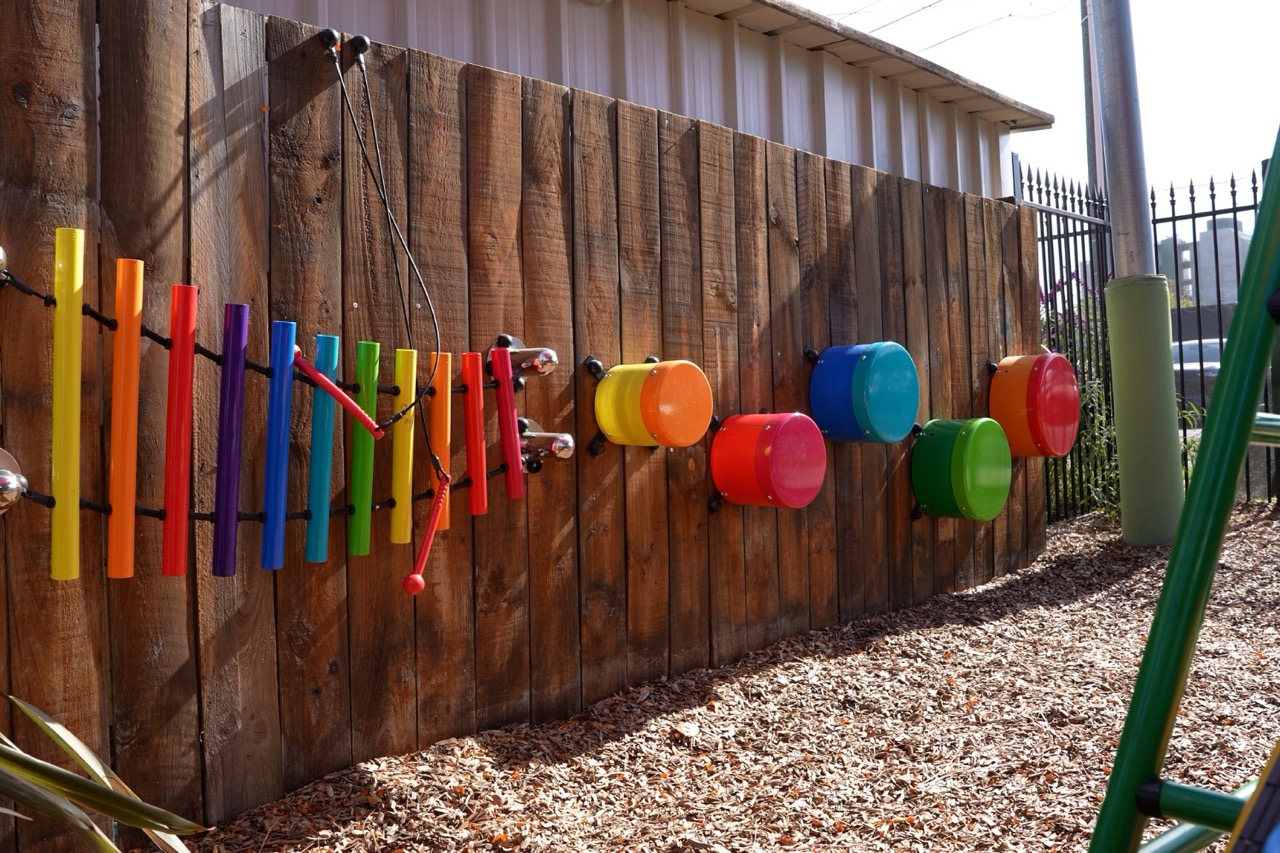
Outdoor musical instruments are the primary sound activation element in a school playground. They require no instruction, no teacher supervision to initiate, and engage students of all year levels and abilities simultaneously.
Touch: activating the tactile sense
Touch-based sensory play involves surfaces, textures, and materials that students can physically feel during play. Textured pathway markings, raised tactile elements, sandpits, and natural materials all activate the tactile sense in ways that benefit students with sensory processing differences and support fine and gross motor development across all year levels.
Tactile elements in a school playground are particularly valuable for Foundation to Year 2 students, where hands-on physical exploration is the dominant mode of learning and social interaction.
Sight: activating the visual sense
Visual sensory play involves colour, pattern, and spatial design that stimulates the visual sense and provides orientation cues within the playground environment. Thermoplastic line markings are the most effective and durable visual sensory element available for school playgrounds.
High-contrast colour combinations, defined zones, and clear visual boundaries all support students with spatial processing differences and make the outdoor environment more navigable for students with vision impairments or autism spectrum conditions.
Movement: activating the proprioceptive and vestibular senses
Movement-based sensory play activates the proprioceptive sense (awareness of body position) and the vestibular sense (balance and spatial orientation). Running circuits, fitness trails, and structured movement paths give students who need physical input a purposeful outlet during recess that is not dependent on competitive sport.
Research consistently shows that students with sensory-seeking behaviours, including those with ADHD, benefit significantly from structured movement opportunities during the school day. Movement-based sensory stimulation activities are among the most evidence-supported sensory play activities for school use and require no specialist equipment beyond the surface marking itself.
12 Sensory Play Ideas for Primary School Playgrounds
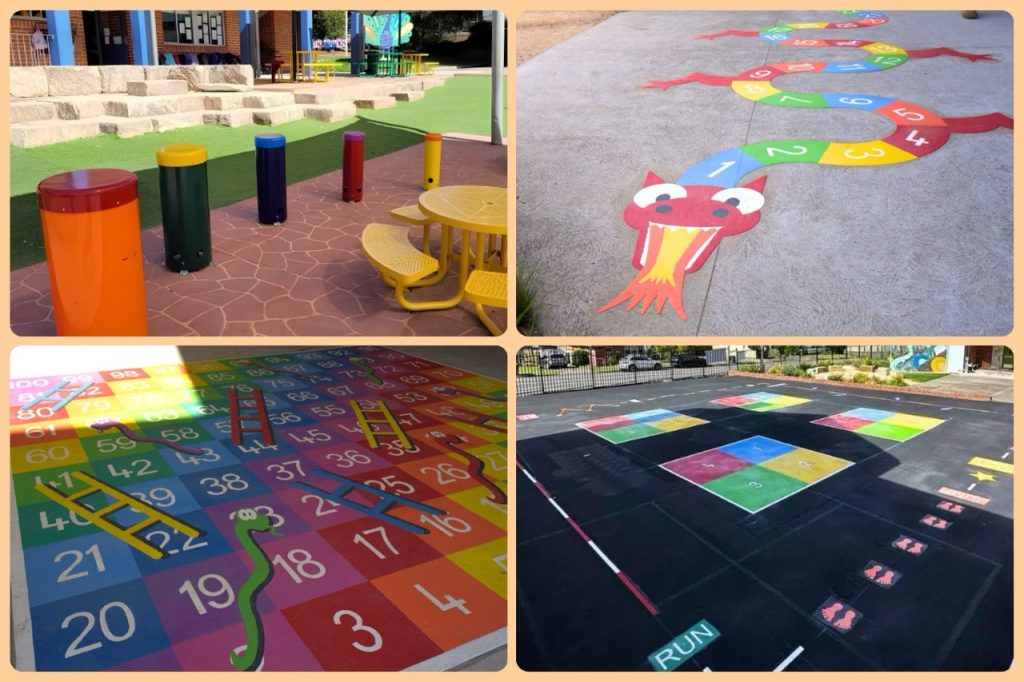
The following ideas are organised by sensory type and selected specifically for primary school playgrounds in Australia. Each one is commercially available, durable for daily school use, and practical to install on existing asphalt or concrete surfaces. Whether you are looking for sensory games for school recess or structured sensory play activities, this list covers options across all four activation types.
| Sensory Type | Sensory Play Idea | Installation Requirement | Best Age Group |
|---|---|---|---|
| Sound | Outdoor drum set | Ground or surface mount. Min 2m x 2m footprint. Any hard surface. | All year levels |
| Sound | Outdoor xylophone | Ground mount. Covered walkway or open area. 1m x 2m footprint. | All year levels |
| Sound | Harmony chimes | Wall or post mount. Can attach to existing fence or structure. | Foundation–Year 4 |
| Touch | Textured pathway marking | Thermoplastic applied to existing asphalt. Minimal footprint. | Foundation–Year 3 |
| Touch | Sensory trail (mixed textures) | Multi-surface path installation. 3m to 8m length. | Foundation–Year 4 |
| Touch | Raised sandpit | Freestanding unit on existing surface. 1.5m x 1.5m minimum. | Foundation–Year 2 |
| Sight | High-contrast colour zones | Thermoplastic markings on existing asphalt. Any size or shape. | All year levels |
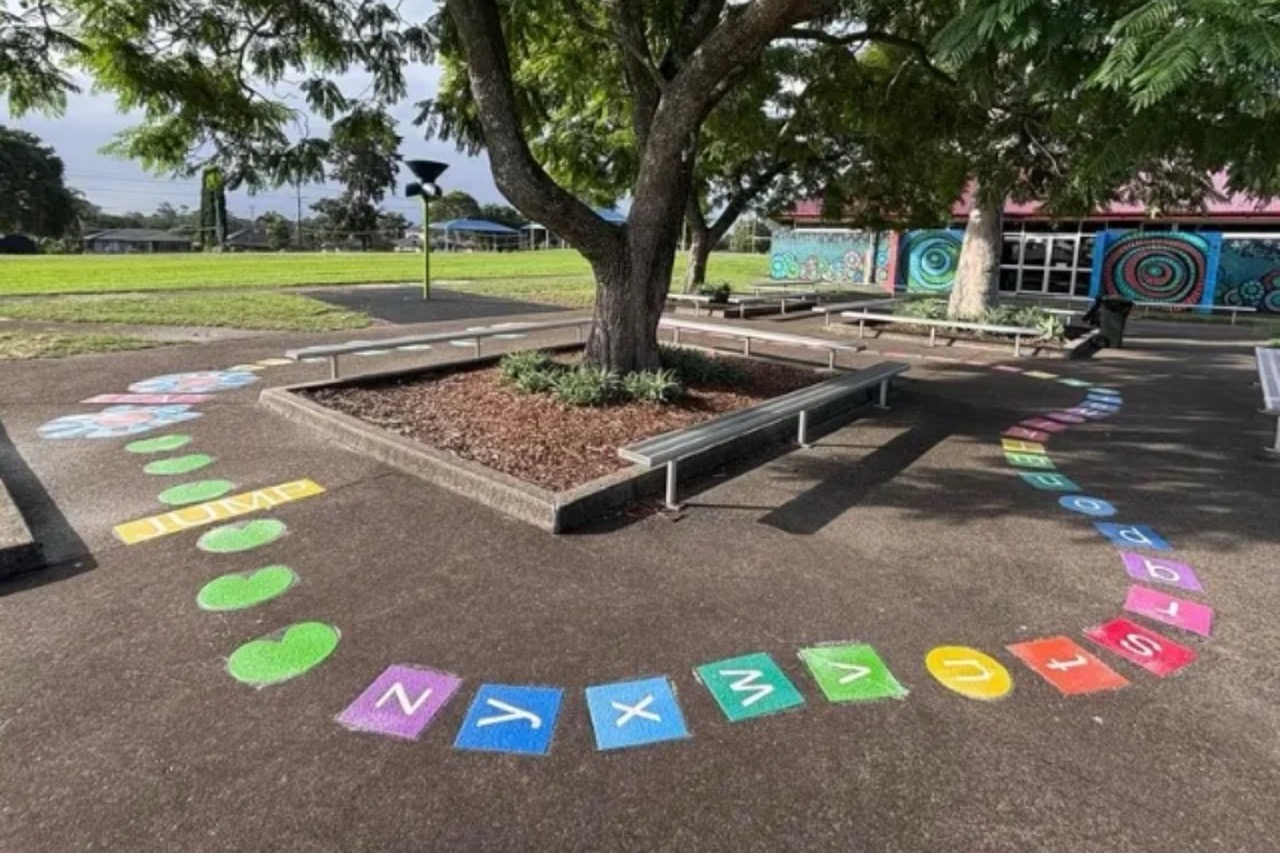
| Sight | Alphabet and numeracy trails | Thermoplastic applied to existing path or asphalt corridor. | Foundation–Year 3 |
| Sight | Sensory garden zone markers | Thermoplastic boundary markings defining a sensory garden area. | All year levels |
| Movement | Running or fitness circuit | Thermoplastic path marking on existing asphalt. Custom to space. | Years 2–6 |
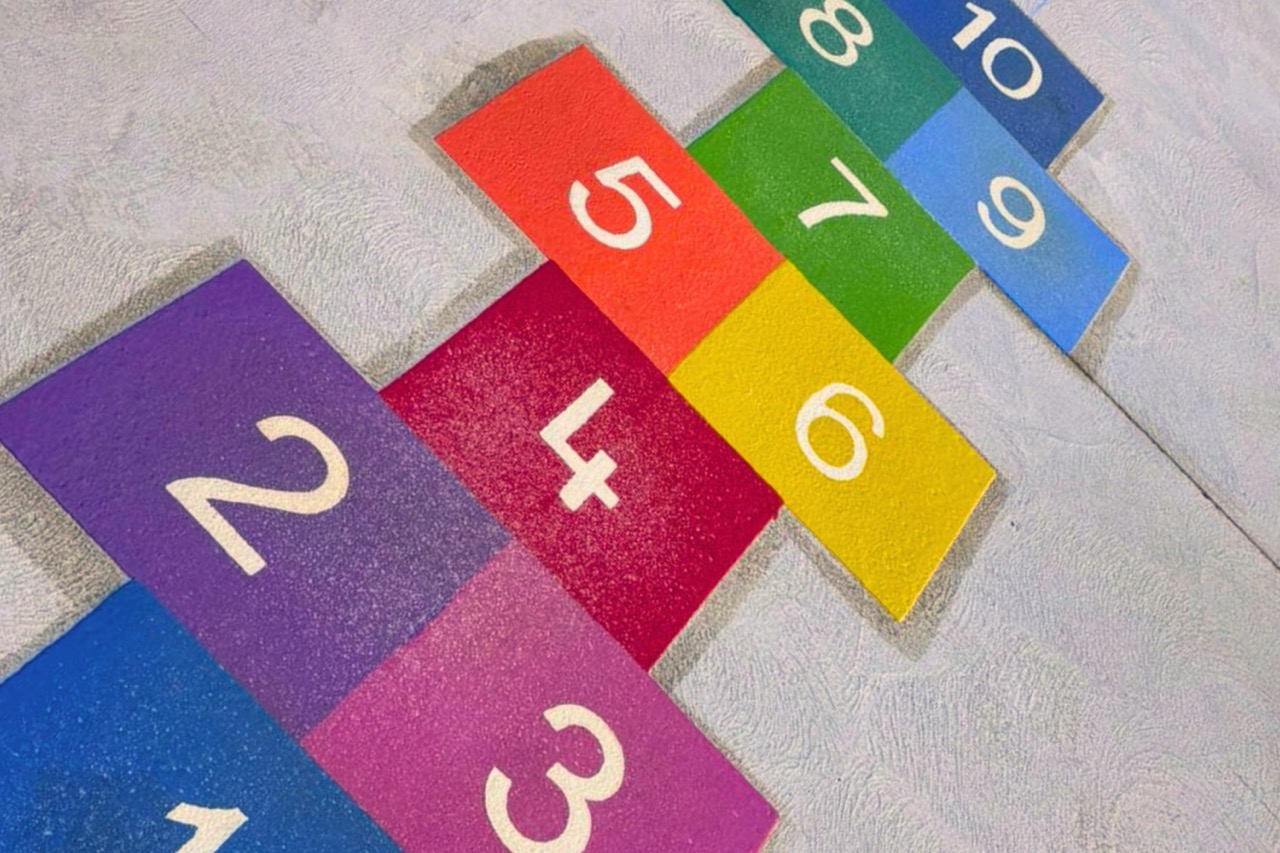
| Movement | Hopscotch and jumping grids | Thermoplastic marking. 3m x 1m per standard grid. | Foundation–Year 4 |
| Movement | Balance trail markers | Thermoplastic stepping pattern on existing surface. | Foundation–Year 3 |
Sound: outdoor musical instruments
Outdoor musical instruments are the most impactful single sensory addition available for a primary school playground. EduMarking’s outdoor musical instruments range includes marine-grade stainless steel drums, xylophones, chimes, and harmony petals that are built for Australian weather conditions and require no maintenance beyond occasional cleaning.
A single drum set accommodates group play for five or more students simultaneously. A xylophone or harmony chime engages individuals or pairs. Installing two to three instruments in a cluster creates a dedicated sound zone that draws students during every recess period without any teacher prompting.
Inclusion note
- Outdoor musical instruments are designed for wheelchair and mobility aid access and are frequently funded through disability inclusion grants and student wellbeing initiatives. EduMarking can provide a product specification sheet and project brief to support grant applications.
Touch: textured pathway markings and sensory trails
Textured pathway markings are one of the most space-efficient sensory play ideas available for school playgrounds. Applied using the same thermoplastic material used in EduMarking’s playground line marking installations, textured tactile markings can be laid on any existing asphalt or concrete surface without groundworks or structural modification.
A sensory trail combines multiple surface textures in a defined walking or stepping path. Students with tactile-seeking needs engage with it repeatedly. Students with tactile-defensive needs can approach it at their own pace. Both outcomes are valuable in an inclusive school environment.
Sight: high-contrast colour zones and educational markings
Visual sensory play through thermoplastic colour markings does more than brighten a playground. High-contrast colour zones provide visual boundaries that support wayfinding for students with spatial processing differences, give autistic students clear environmental cues about the purpose of each area, and create a more organised, calmer visual environment overall.
Alphabet trails, numeracy paths, and sensory garden zone markers all combine visual activation with educational content, turning the playground into an extension of the classroom in a way that feels like play rather than instruction.
Movement: running circuits and jumping grids
Movement-based sensory play gives proprioceptive-seeking students, those who need physical input to self-regulate, a structured and appropriate outlet during unstructured time. A running circuit marked on existing asphalt requires no equipment, no supervision to initiate, and no maintenance beyond the marking itself.
Jumping grids, balance trail markers, and hopscotch patterns all activate the vestibular and proprioceptive senses while remaining structured enough to avoid the chaos that uncontained movement can create. For specific game-based marking options that complement these sensory elements, see our playground games guide.
Ready to add sensory play to your school playground?
- EduMarking installs outdoor musical instruments and thermoplastic sensory markings across Australia. We can design a sensory zone that fits your existing grounds and budget, installed during school holidays with zero disruption to the school day.
Putting Sensory Play Ideas into Practice on Your School Playground
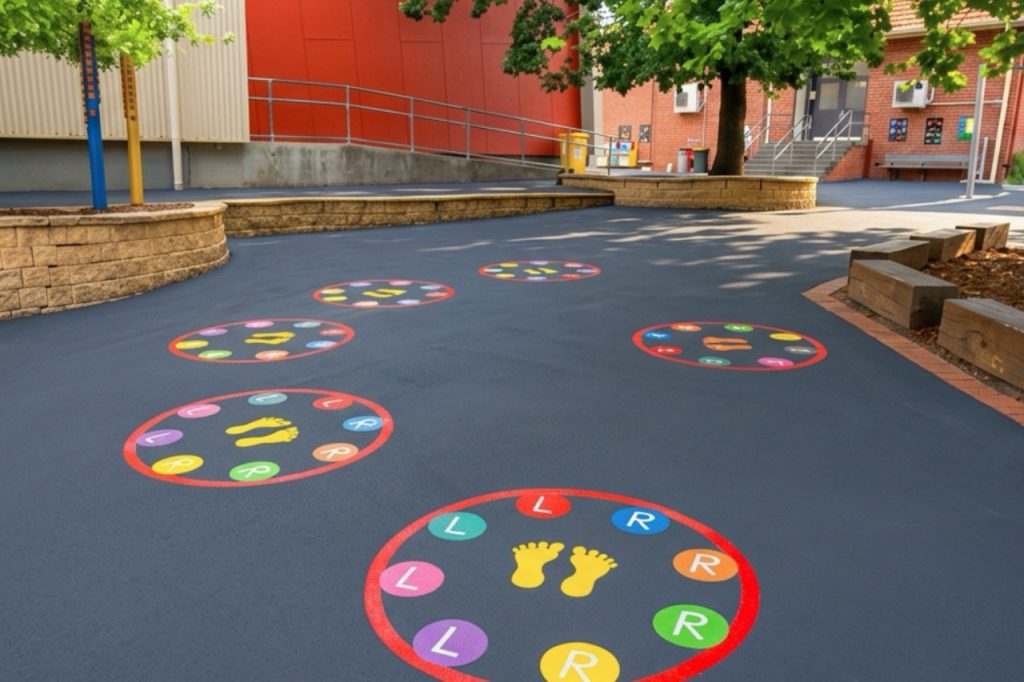
A sensory-friendly playground is not a separate space added to the side of an existing playground. It is a design approach applied across the whole outdoor environment. ACHPER’s 2024 National Position Statement on School Recess recommends that schools provide varied play environments during recess, giving students access to different types of engagement rather than a single-function space. Sensory-friendly playground activities are most effective when the environment is designed to invite them, rather than expecting students to create the engagement themselves.
Start with the students you are designing for
The most effective sensory playground designs begin with a clear understanding of which students are currently underserved by the outdoor environment. A playground dominated by competitive sport courts serves students who enjoy competitive sport. Students who do not, including those with sensory processing differences, anxiety, or social difficulties, need a different kind of engagement.
Consulting with your learning support team, occupational therapist, or NDIS coordinator before designing a sensory zone will identify the specific sensory types that have the most impact for your school’s cohort.
Zone by sensory type, not by area size
Sensory zones do not need to be large. A 10 to 20 square metre area of existing asphalt can accommodate a two-instrument sound zone, a sensory trail, and a jumping grid simultaneously. The key is defining each zone visually through colour markings so students understand the purpose of the space.
Schools with existing outdoor seating areas adjacent to sensory zones create a natural quiet recovery space for students who need to step back from sensory engagement before returning to class.
Design for all abilities from the start
Sensory play ideas designed for students with sensory processing needs are, almost without exception, also beneficial for neurotypical students. Musical instruments engage every student. Textured pathways engage every student. The inclusive design principle applied to sensory playgrounds produces better outcomes for the whole school community, not just those with identified needs.
For more on how outdoor play environments support the full spectrum of student outcomes, see our guide to the outdoor play benefits for primary school students.
Frequently Asked Questions
A sensory-friendly playground activates more than one sensory type, provides clear visual zoning so students understand the purpose of each space, includes at least one quiet or low-stimulation area alongside active sensory elements, and is accessible to students with physical, cognitive, or sensory differences. The most effective sensory-friendly school playgrounds combine sound elements such as outdoor instruments, tactile elements such as textured markings, visual elements through high-contrast colour zones, and movement elements such as running circuits.
The five sensory skills activated through outdoor play are sight, hearing, touch, proprioception (body awareness and position), and vestibular (balance and spatial orientation). School playgrounds that include visual markings, musical instruments, textured surfaces, and movement circuits address all five sensory skills within the same outdoor environment. Developing all five contributes to self-regulation, coordination, spatial awareness, and the ability to focus in classroom settings.
A sensory playground is an outdoor play environment designed to activate multiple senses simultaneously and provide different types of sensory engagement for different students. In a primary school context, a sensory playground typically includes sound elements such as outdoor musical instruments, tactile elements such as textured surfaces or sensory trails, visual elements through thermoplastic colour markings, and movement elements such as circuits or balance paths. The goal is to create an environment where every student, regardless of how they learn or process sensory input, has a genuine reason to engage during unstructured time.
Sensory games in a school setting develop self-regulation, coordination, social participation, and the ability to transition back into focused classroom work. Students who have had adequate sensory input during recess, through movement, sound, and touch, return to class better able to concentrate and less likely to exhibit disruptive behaviour. Research from the 2024 Educational Sciences study found that multi-sensory learning environments produced 34% better engagement and retention, a finding directly relevant to how schools design their outdoor breaks.
Calming sensory activities are those that provide sensory input at a lower intensity: chimes and harmony instruments over loud percussion, smooth textured paths over rough-surface scramble elements, and quiet garden zones with visual interest over high-energy movement circuits. Schools managing students with anxiety, sensory overload, or emotional regulation challenges should include at least one low-intensity sensory zone alongside active sensory elements. A shaded seating area adjacent to a chime installation is one of the most cost-effective calming sensory environments available to Australian primary schools.
Give every student a reason to be outside.
EduMarking designs and installs outdoor musical instruments and thermoplastic sensory markings across Australia. From single-instrument installations to complete multi-zone sensory playgrounds, we build outdoor environments that serve every student, every day. All installations are backed by a 5-year product warranty and completed during school holidays.