Thermoplastic line marking is the same material road authorities across Australia use to mark highways, intersections and pedestrian crossings. It is engineered to withstand constant traffic, UV exposure and wet weather for years without fading, chipping or peeling. In particular, for your school playground, it brings that same infrastructure-grade performance to an environment that sees comparable levels of daily use.
However, paint on school playgrounds typically deteriorates within 12 to 18 months under normal conditions. If your school relies on paint, you are repainting every one to two years, spending money on a surface that deteriorates faster with each cycle. Beyond the ongoing cost, faded or chipped painted markings become slippery in wet weather and create a genuine duty-of-care risk.
Australia’s school line marking specialist EduMarking has applied playground line marking at more than 10,000 schools across Australia and internationally. The questions your principal or business manager will ask are: what thermoplastic line marking is, how long it lasts, how it compares with paint on cost, and what designs are available. This guide answers all four.
Key Takeaways
- Thermoplastic line marking is a heat-fused polymer compound that bonds permanently to asphalt and concrete surfaces.
- It lasts seven or more years under normal school use, compared to 12 to 18 months for painted alternatives.
- Quality installations are typically backed by product warranties of two to five years, depending on the installer.
- The material is non-slip, UV resistant and will not peel or chip under school conditions.
- It is available in a wide range of designs: sport courts, educational markings, custom logos and sensory paths.
How Thermoplastic Line Marking Is Applied
Professional thermoplastic installation follows a consistent sequence regardless of the installer. A standard school project typically takes one to three days and is best scheduled during school holidays or weekend windows to avoid disrupting your students and staff.
Step 1: Surface Assessment
Specifically, your existing surface is inspected for cracks, contamination and structural integrity. Deteriorated, oily or contaminated surfaces need remediation before marking begins. Applying thermoplastic to a compromised base significantly shortens the marking’s lifespan, so a thorough assessment is always the first step.
Step 2: Design Layout
Next, the installer uses templates and stencils to mark out exact dimensions and positioning before any material is applied. This gives your school an opportunity to review and approve the proposed layout before installation begins, ensuring precision across the full design.
Step 3: Application
The thermoplastic compound is then heated to its working temperature and applied using specialist equipment. It bonds to your surface on contact and begins cooling immediately. Skilled installers work section by section to maintain accuracy, particularly on designs with tight dimensional tolerances such as sport court lines.
Step 4: Cooling and Handover
Finally, each marking typically sets firm within 5 to 15 minutes under normal ambient conditions. The installer inspects completed sections before moving on. Your school should receive the opportunity to inspect and sign off on the finished work before the crew leaves site.
Thermoplastic vs Paint: The Numbers That Matter
The performance gap between thermoplastic line markings and brush-applied playground paint is significant under real Australian school conditions. The table below summarises the key differences.
| Thermoplastic | Paint | |
|---|---|---|
| Lifespan | 7 or more years | 12 to 18 months |
| Product warranty | 2 to 5 years (installer dependent) | None |
| Non-slip surface | Yes | No |
| UV resistant | Yes | No |
| Annual repainting | Not required | Every 1 to 2 years |
Over a seven-year period, your school using paint will typically repaint the same area three to four times. As a result, each repainting adds cost, disrupts the yard and restarts the same deterioration cycle. A quality thermoplastic installation outperforms all of those repaints combined, at a lower total cost over the same period.
The upfront cost of thermoplastic is higher than a single coat of paint. However, the total investment across seven years is lower, and the safety outcomes are significantly better throughout. This is the calculation most schools make when they switch.
Why Australian Schools Choose Thermoplastic Markings
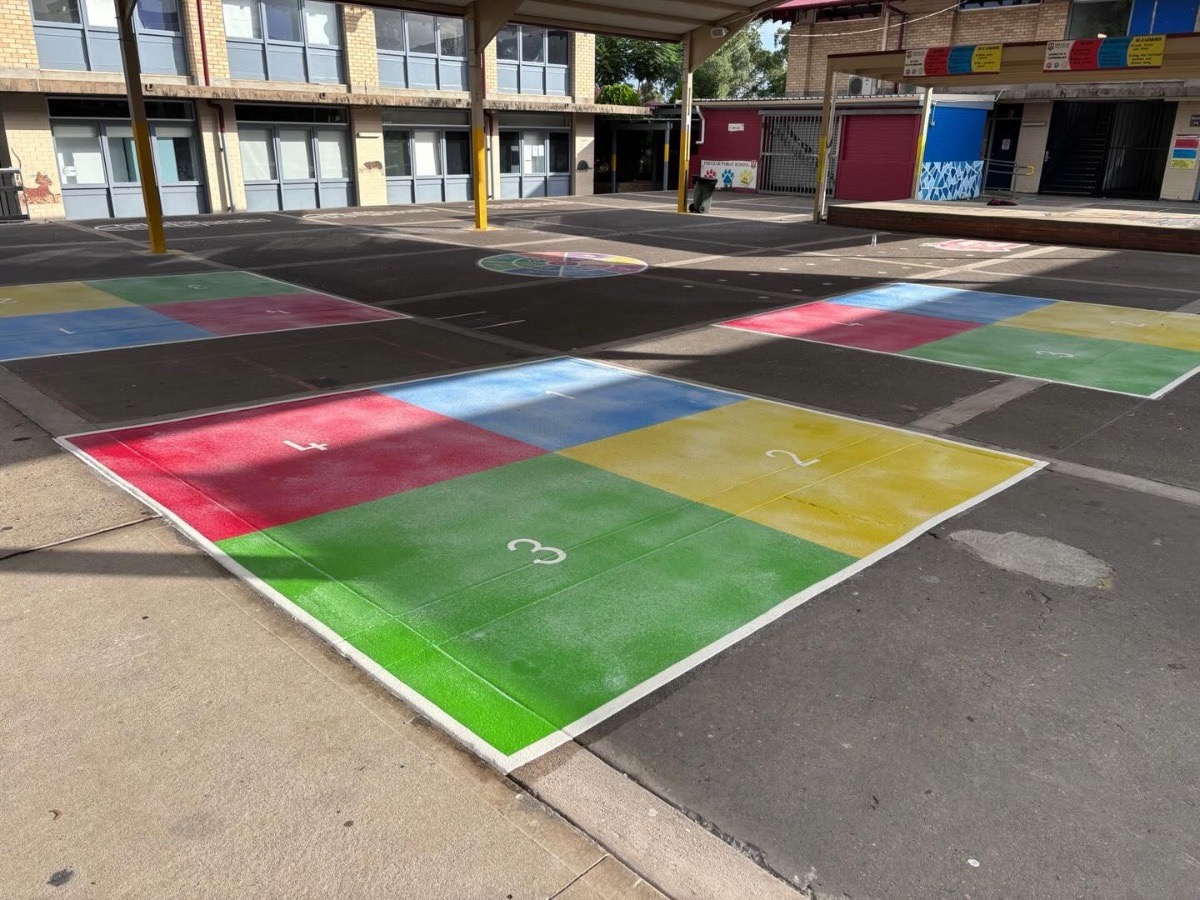
Five factors consistently drive the decision for your school to switch from paint to thermoplastic.
Durability. Specifically, thermoplastic survives the daily demands of your school playground, including heavy foot traffic, outdoor furniture, maintenance equipment and Australian weather conditions, without fading, peeling or cracking. Under normal use, it is expected to last seven or more years. Painted alternatives typically deteriorate within 12 to 18 months.
Safety. In addition, the surface texture of thermoplastic provides grip in wet weather. Your playground is subject to rain, and a slippery surface marking creates a genuine duty-of-care risk for school operators. Thermoplastic’s non-slip properties are retained for the full lifespan of the marking, unlike paint which becomes hazardous as it deteriorates.
Compliance. Furthermore, Australian schools are required to maintain playground environments that meet playground equipment and surfacing standards, specifically AS 4685:2014. Quality thermoplastic installations are completed to this standard, and a documented warranty from your installer supports your school’s duty-of-care records and capital works submissions.
Predictability. As a result, a thermoplastic marking with a documented lifespan can be included in your school’s capital works schedule as a planned line item. That is the infrastructure approach to school outdoor spaces: planned, documented and budgeted rather than patched reactively when surfaces fail.
Visual impact. Finally, thermoplastic retains its colour and vibrancy far longer than paint. Your school playground marked with thermoplastic will look as sharp in year three as it did on day one of installation.EduMarking prepares customised design concepts for your school within 24 hours of a first enquiry, at no cost. Book a free site assessment to see what is possible on your grounds.
What Types of Thermoplastic Markings Are Available for Schools?
Thermoplastic is available in a wide range of designs for school environments, covering active play, education, sport and custom applications.
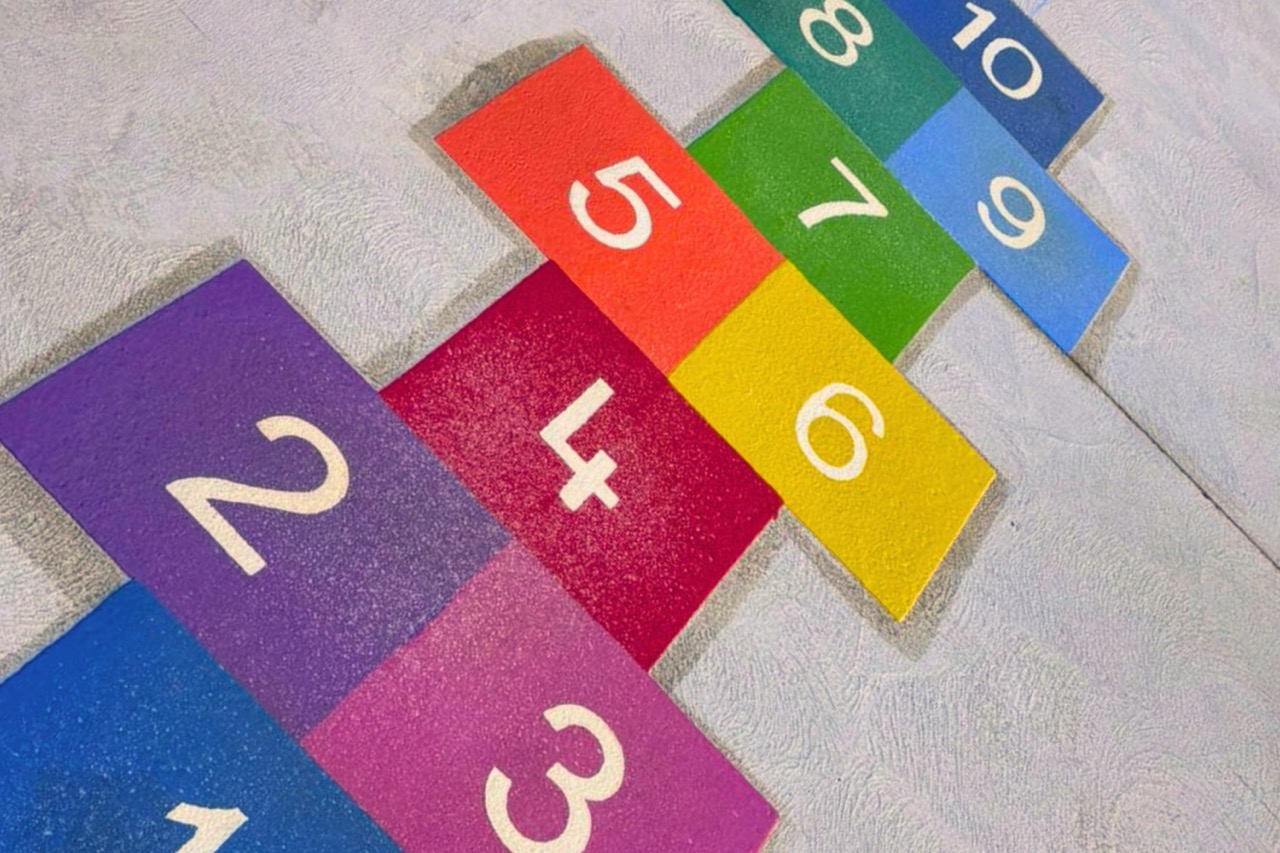
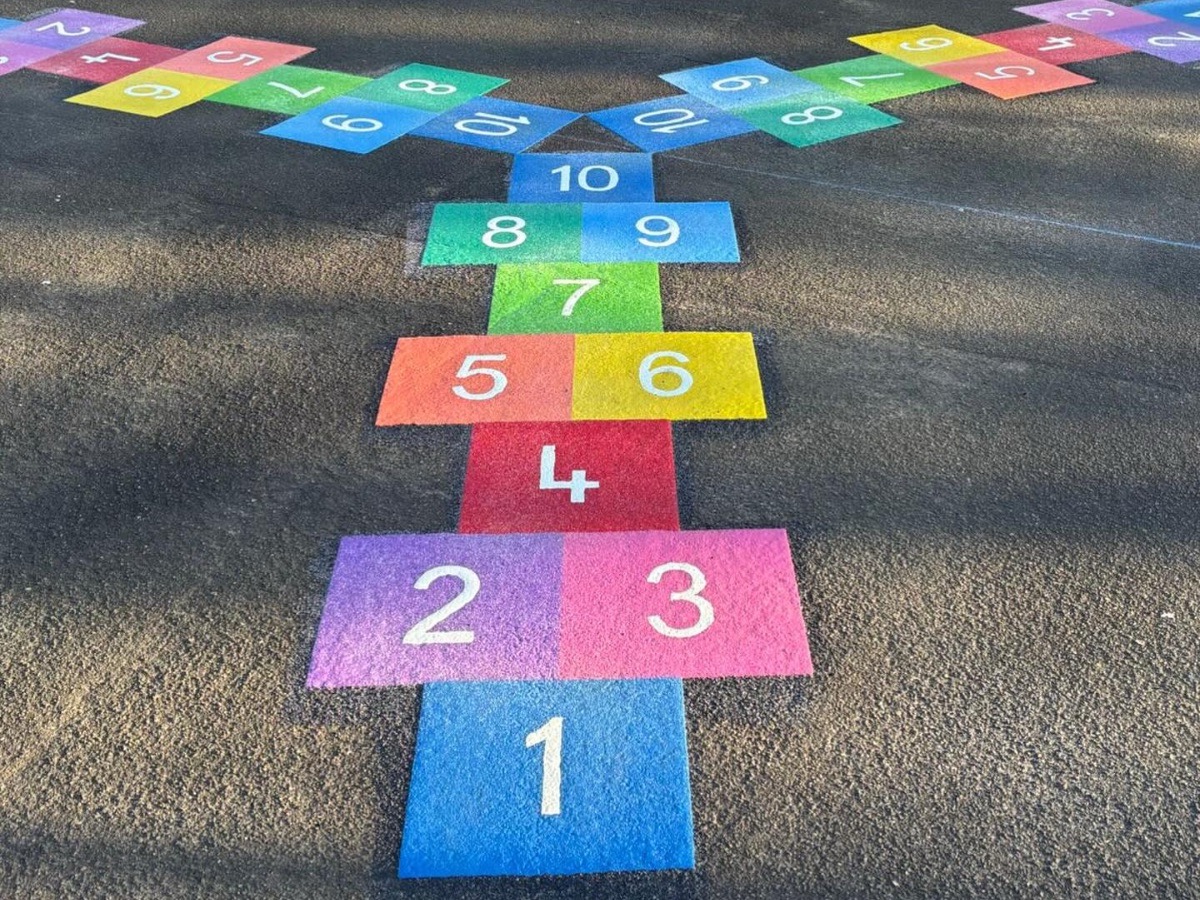
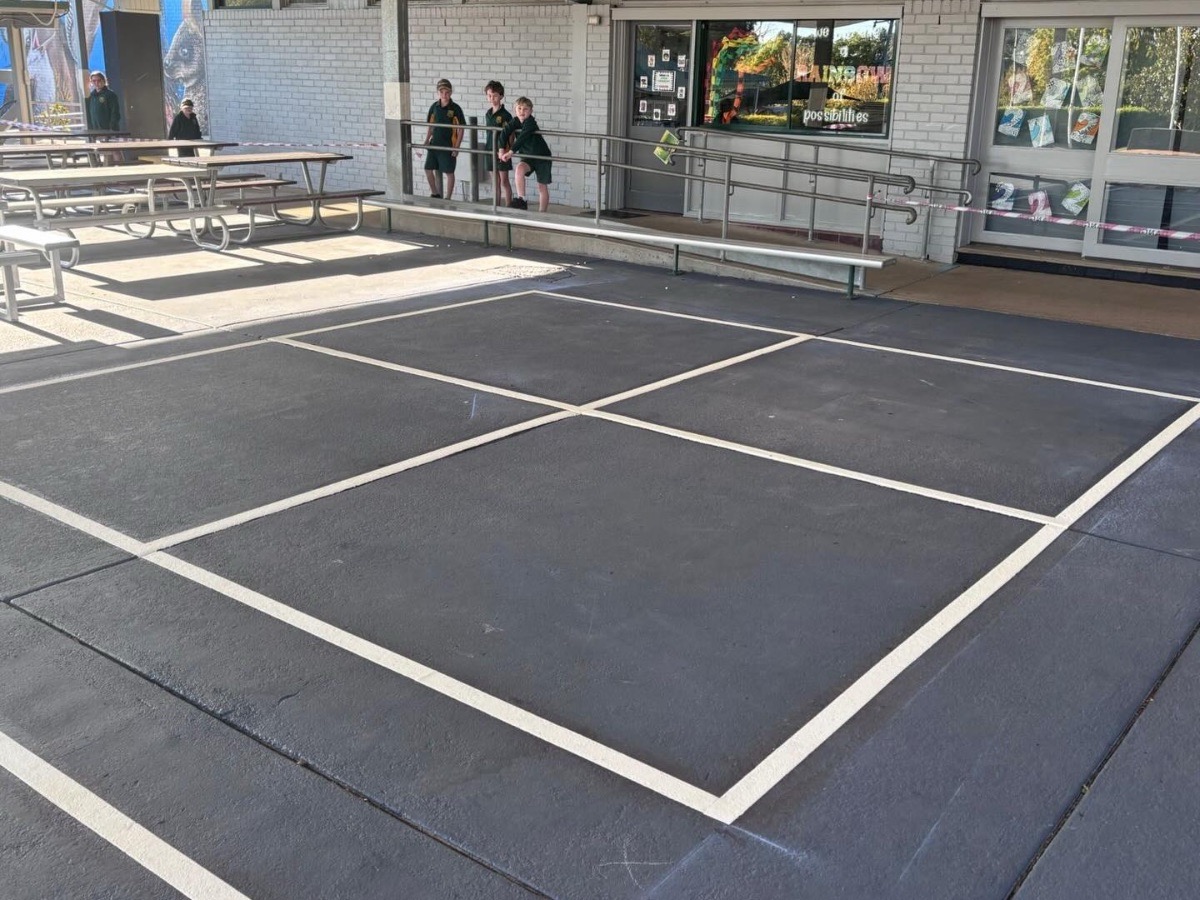
Active play markings. For example, four square courts, running circuits, hopscotch grids and movement games are among the most commonly installed designs. These markings encourage self-directed student play without the need for equipment or adult supervision.
Educational markings. Similarly, number grids, alphabet trails, measurement paths and curriculum-linked designs extend classroom learning into the outdoor environment. Research consistently supports the benefits of outdoor learning for student engagement and retention.
Sport court markings. Additionally, basketball, netball, tennis and multi-use court lines can be applied to precise specifications on prepared surfaces. Court markings can be layered on a single surface to accommodate multiple sports within the same footprint.
Custom school designs. Furthermore, school crests, cultural acknowledgements and bespoke layouts can be produced from thermoplastic. Most professional installers offer a design service for custom work prior to installation.
Sensory and inclusive markings. Also, sensory paths, movement trails and accessible designs support students of all abilities. These installations are frequently funded through NDIS school grants and disability inclusion funding in Australia.
In addition, cold applied plastic line marking is a related product applied without heat using a two-part chemical cure system. It offers comparable durability to thermoplastic and suits surfaces or environments where heat application is not practical.
How Long Does It Last Under School Conditions?
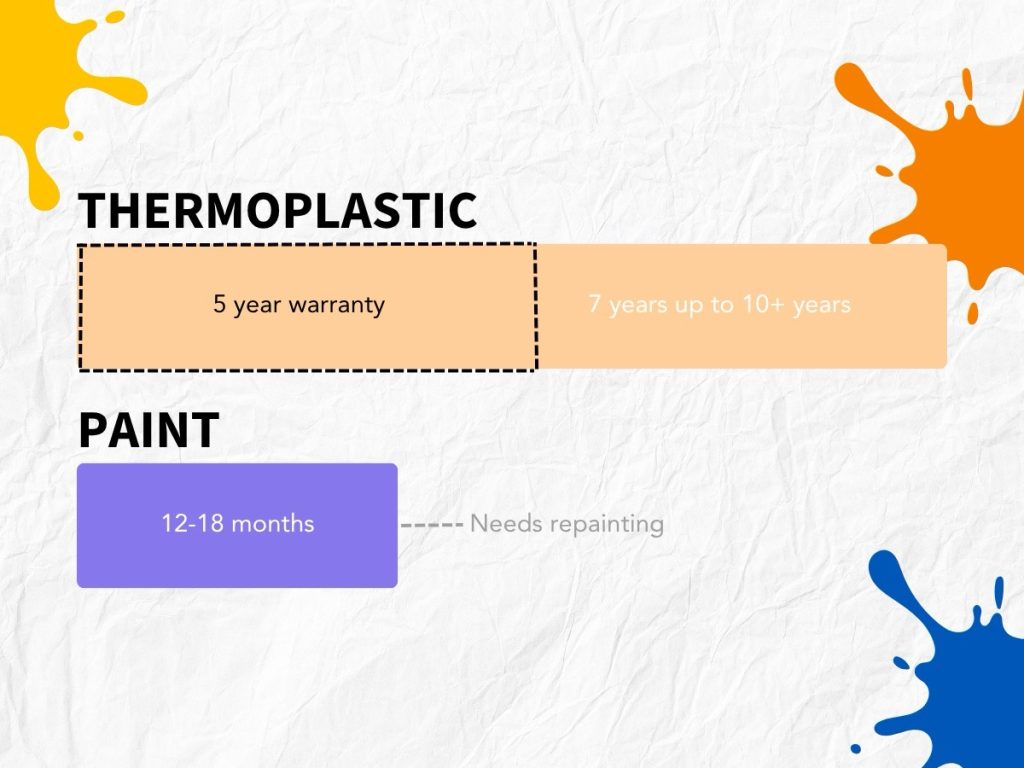
Under normal school use, quality thermoplastic line markings are expected to perform for seven or more years before a rejuvenation assessment is recommended. This is the benchmark professional installers use when planning your maintenance schedules and capital works cycles.
In practice, surface preparation at the time of installation is the single biggest factor in longevity. Thermoplastic applied to a structurally sound, clean and properly prepared surface will consistently outperform the same product on a deteriorated base. Similarly, high-traffic zones, such as the centre of a frequently used game court, will typically show wear before areas with lower foot traffic.
In addition, reputable installers typically back thermoplastic work with product warranties of two to five years. EduMarking’s standard warranty covers all thermoplastic installations for five years, with each job tracked from the completion date so your school can plan ahead for the playground maintenance and rejuvenation window.
What Does Playground Line Marking Cost?
The cost of thermoplastic line marking varies depending on design complexity, the number of markings, surface area and the condition of your existing surface. Specifically, larger or more detailed designs, and surfaces requiring preparation work before marking can begin, will cost more than straightforward installs on sound surfaces.
As a general benchmark, individual thermoplastic designs in Australia typically start from a few hundred dollars each, with whole-playground packages offering better value per design than individual orders. This compares with painted markings that cost less per application but require repainting every one to two years.
Additionally, before your school commits, it is worth running the comparison across a full seven-year period. In practice, paint applied three to four times over that cycle typically costs more in total than thermoplastic installed once, without accounting for repeated disruption or the compounding safety risk of deteriorating painted markings.
Your school can choose from packaged options with EduMarking to simplify the decision. The Silver Package covers any seven designs, and the Gold Package covers any five designs plus any three large designs, including a school logo.Pricing is consistent nationally, with no premium for regional schools. Pricing and package selection depend on the number of designs and your surface area. Request a Quote to get a scope tailored to your school’s grounds.
Frequently Asked Questions
Yes. Thermoplastic bonds to both asphalt and concrete, provided the substrate is structurally sound, clean and free from contamination such as oil, grease or loose material. In practice, surface condition should always be assessed before installation begins. Most professional installers offer a site assessment at no cost before committing to a scope.
Both terms describe the same heat-applied polymer product. Specifically, the distinction worth understanding is between thermoplastic and standard brush-applied playground paint. Thermoplastic is heated to around 200 degrees Celsius and fuses into the surface substrate, while paint forms a film on top of the surface. This difference in adhesion explains why thermoplastic lasts significantly longer and does not peel or chip the way paint does.
Yes. Thermoplastic can be removed using specialist grinding or planing equipment. In fact, this is standard practice when schools are replacing worn markings or updating their playground layout. After removal, the surface is prepared and new thermoplastic is applied. Partial removal within a large installation can sometimes be more complex than removing and replacing the full design.
Most school installations are completed within one to three days, though larger or more complex projects may take longer. The timeline depends on the number of designs, the total surface area and whether surface preparation is required. Typically, scheduling during school holidays or weekend windows is standard practice to avoid disrupting your students and staff.
Warranty terms vary between installers. Specifically, quality thermoplastic products applied to a sound surface by a qualified installer are typically backed by product warranties of two to five years. Accordingly, always ask for warranty terms in writing before signing off on a project. EduMarking’s standard warranty covers all thermoplastic installations for five years, with each installation tracked from completion so your school can plan ahead for the maintenance window.
Ready to Replace Your Painted Markings?
A free site assessment is the first step. EduMarking reviews your grounds, identifies the right designs and delivers a clear scope and quote with no obligation to proceed.